 Gage Skidmore from Peoria, AZ, United States of America
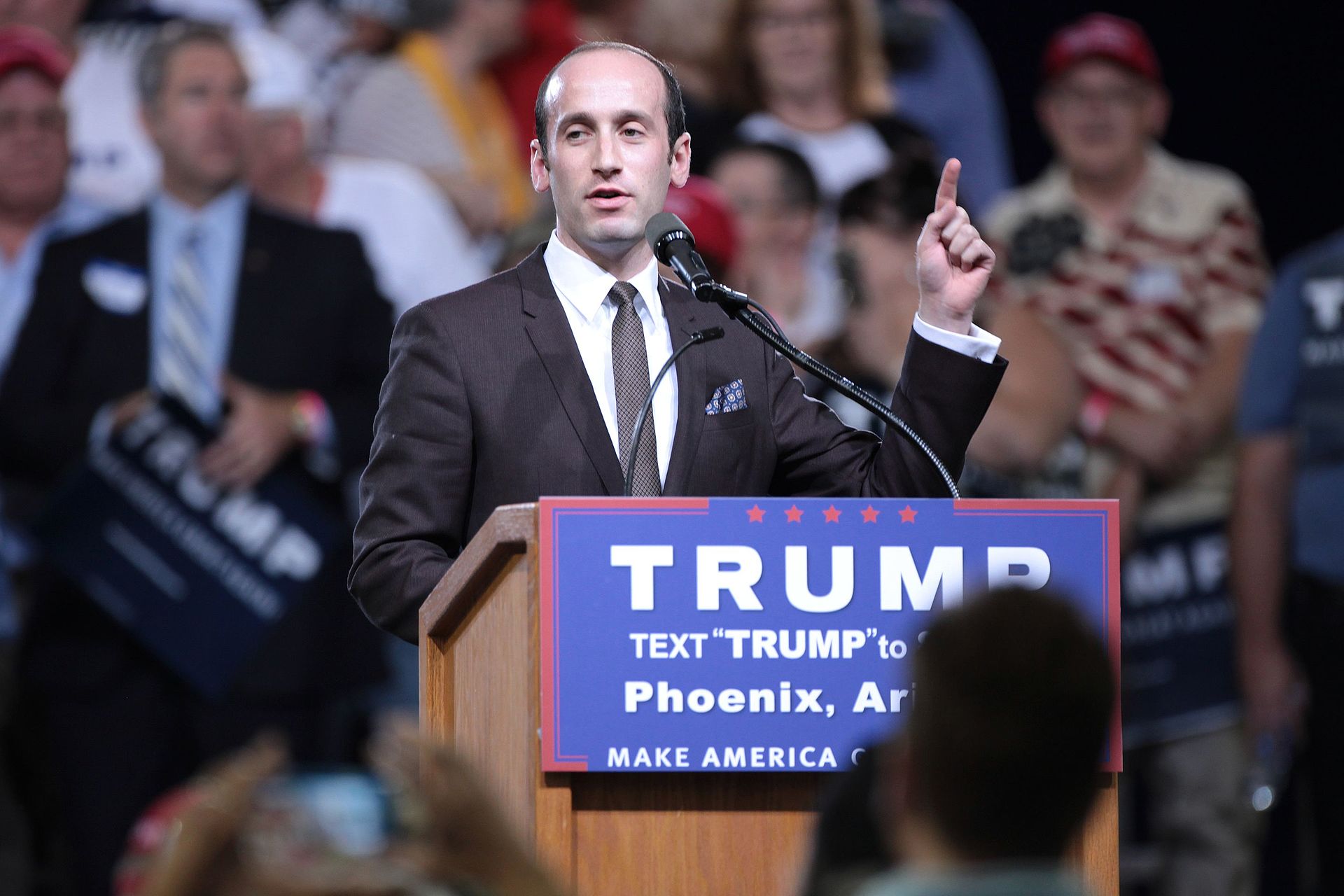
Stephen Miller, the United States Homeland Security advisor, wants to prevent undocumented children from accessing public education, according to sources present at a meeting last month with Texas legislators in Washington (Stephen Miller Asks Why Texas Pays to Teach Undocumented Children - The New York Times). Miller wants state legislators to pass several conservative immigration laws and questioned why the Texas Legislature, which is dominated by Republicans, did not pass a bill last year that would have funded public education only for children who were citizens or legally present in the United States.
It is worth noting that this decision goes against the Supreme Court precedent in the 1982 case of Plyler v. Doe, which determined that states, regardless of the child's status, must guarantee access to primary education for all students. Thus, schools are discouraged from collecting information from students about their immigration status at the time of enrollment.
Ending public school funding for undocumented students in Texas would influence other Republican states with large immigrant communities. Studies in Texas estimate that there are more than 100,000 undocumented students in the state (Stephen Miller Asks Why Texas Pays to Teach Undocumented Children - The New York Times). And according to another study (Immigrant kids can attend school regardless of citizenship – some states are challenging this standard), about 1.5 million minors under the age of 18 are undocumented immigrants in the country. Of these, about 700,000 are students and are enrolled in elementary and secondary schools.
State Representative Ramon Romero, a Democrat and chairman of the Mexican-American Legislative Group, stated (Immigrant kids can attend school regardless of citizenship – some states are challenging this standard) that the meeting appeared to be part of a: “White House effort to pressure legislators to approve extreme immigration policies that do not reflect the needs of our state.” Furthermore, a spokesperson for Texas Governor Greg Abbott declared that “American citizens should be the first to have access to public services and should not be forced to bear the costs of supporting those whose entry into this country began by violating its laws”. The governor himself had previously spoken about contesting the decision in the Plyler v. Doe case. Also in 2022 and, in March 2026, Mandy Drogin, campaign director of the conservative think tank Texas Public Policy Foundation, spoke out against the Plyler case decision at a hearing in the US Congress.
Thus, many Republican lawmakers are trying to challenge this Supreme Court decision, which makes it more difficult for undocumented immigrant children to access public schools, since the decision contributed to the education of thousands of children in states that did not allow them to enter education. In 1975, Texas allowed charging fees to undocumented students, but in 1982, after this case, the Supreme Court ruled that immigration status is not justification for denying rights to residents of the country. Since then, no state can bar, charge extra fees, or discriminate against undocumented students in public basic education. Still, there have been attempts to restrict this right, such as Proposition 187 in California, which was deemed unconstitutional in 1998. Furthermore, in 2011, in Alabama, a law required the collection of students' immigration status, which was later declared illegal in 2012.
Recently, in 2025, at least five US states discussed proposals to make it more difficult for undocumented students to access public elementary schools (K-12), although none have been effectively implemented so far. These include Tennessee, Ohio, Idaho, Texas, New Jersey, among others.
In addition, it is worth noting that The Heritage Foundation published a document in February encouraging all states to challenge the decision in the Plyler v. Doe case. Arguing that undocumented immigrants should not have access to benefits since they take resources away from the citizens themselves. Furthermore, it has also published a model of legislation challenging the Plyler case decision, which state legislators could follow when drafting a new bill.
If this movement actually
materializes, many young people living in the United States could be excluded
from the education system. This would prevent them from reaching their full
potential and give them fewer opportunities to contribute to society. This
situation is more than a migration issue, but a debate about fundamental and
human rights. The right to public education in the United States, once
considered by many to be guaranteed, is now revealed to be vulnerable.
Especially in the face of these political pressures that seek to redefine who
should have access to it.