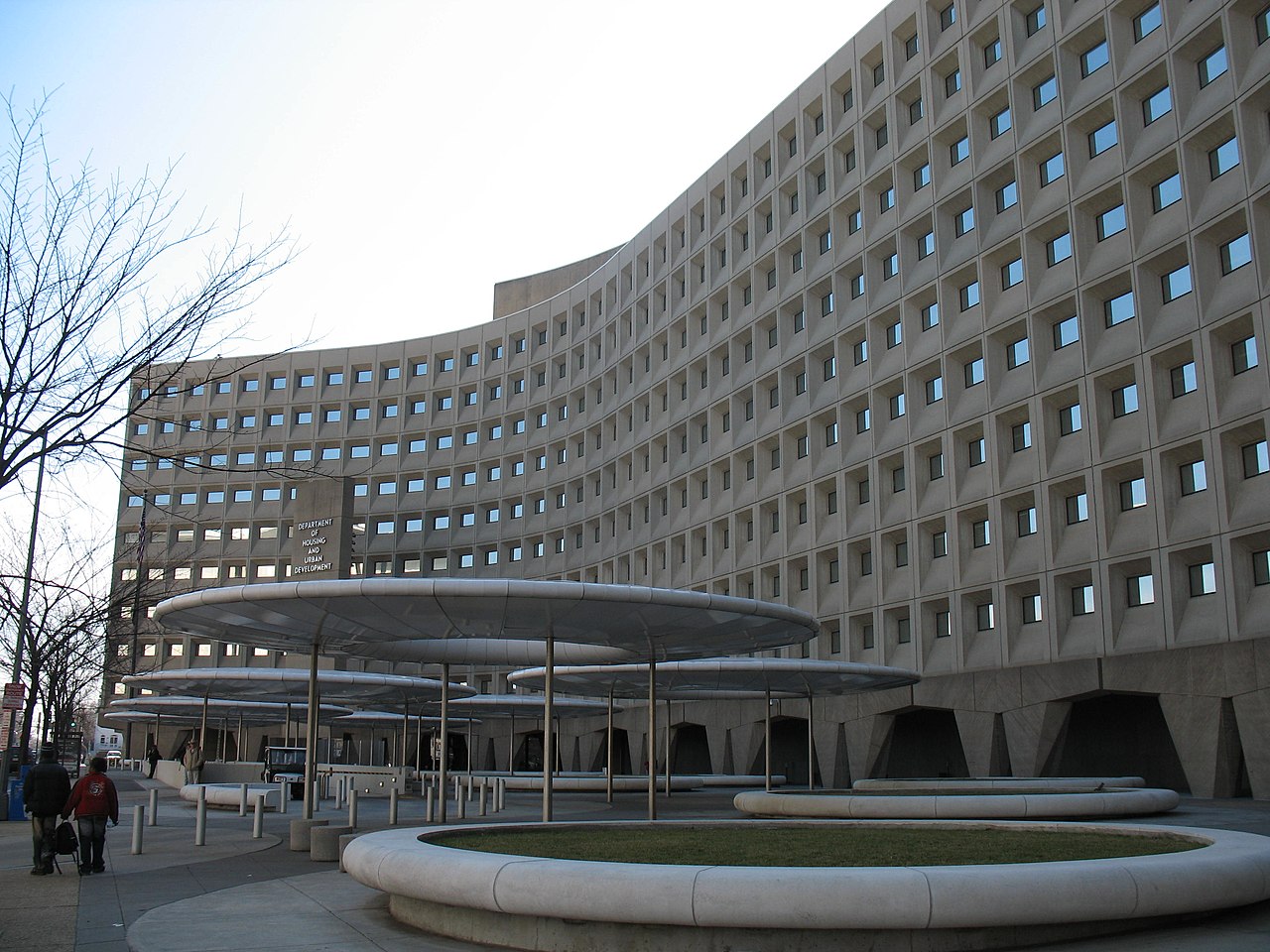
 Photo: Kjetil Ree
On February 20th, the United States Department of Housing and Urban Development (HUD) initiated a proposed implementation of a new rule aimed at preventing undocumented immigrants from living in federally subsidized housing. Under existing laws, this program is already unavailable to undocumented immigrants; however, until now, nothing prevented these individuals from residing with American citizens or legal residents, forming so-called "mixed" families. In this sense, in addition to constituting yet another repressive mechanism directed at the immigrant population, the measure is based on the argument of making the distribution of housing benefits “fairer” and more exclusive to American citizens.
It is also important to remember that, since the previous year, the department had already been sharing data from families registered in the program with the Department of Homeland Security, with the aim of facilitating the identification and location of individuals in irregular immigration situations. Thus, with this possible new configuration, the Donald Trump administration has been fostering an increasingly hostile environment for the migrant population, seeking to achieve, in the words of the department's secretary, Scott Turner, "the end of the era in which illegal immigrants and other ineligible non-citizens exploit public housing resources". In this way, the priority of the benefit would be directed exclusively to the so-called "American people," while the policy presents itself as yet another instrument of hardening and excluding immigration. This is part of yet another of the various anti-immigrant measures that the Donald Trump administration has been working on since its first day in office, and which does not differ in presenting controversies and false advantages to its electorate. In other words, it is no longer news that many jobs and roles held by the immigrant population have suffered a significant exodus, since these are areas in which American citizens no longer show as much interest in working. Recent studies even indicate that immigrants represent a significant portion of the workforce in the United States, reaching about 19% of the total, in addition to contributing hundreds of billions of dollars in taxes and generating approximately US$1.7 trillion in economic activity, highlighting their relevance to the functioning of the national economy.
Furthermore, the implementation of these various obstacles to immigrant residency could also result in an even more significant increase in the homeless population in cities, worsening a scenario that is already critical in urban centers such as New York, San Francisco, New Jersey, and Los Angeles. There are already warnings regarding these measures that restrict access for vulnerable populations to housing programs, as they tend to intensify the housing crisis already faced by these regions. Nevertheless, the economy has not grown in accordance with the many promises made during Trump's campaign, a scenario that has generated frustration among part of the electorate and raised criticism about the concrete results of his economic policy. As a result, social and political tensions within the United States tend to worsen even more.
There is no surprise regarding the series of imminent consequences if this rule is implemented. As already mentioned, cities that already face serious problems related to the homeless population will suffer an even greater aggravation after this measure, and it is important to consider who these affected individuals are: it is estimated that around 80,000 people could be evicted from subsidized housing, approximately 57,000 of them children. In addition, from an economic perspective, the implementation of the measure may also lead to an increase in the expenses of the housing program itself. This is because families with mixed immigration status do not receive full subsidies and, consequently, end up paying proportionally higher rents, which currently generates a form of additional revenue for the department responsible for housing policy. In general, families may be separated, thousands of people will be adrift, without any support or access to basic public services, and many of them may end up living in extremely precarious housing conditions.
At the same time, this scenario tends to increase the vulnerability of this population to immigration enforcement policies, especially in the face of the actions of control agencies such as ICE, responsible for the detention and deportation of undocumented immigrants. Recent reports and complaints from human rights organizations also point to situations of lack of transparency and disappearance of detainees in immigration detention centers, which reinforces concerns about the fate of individuals who become more directly targeted by these repressive policies.
Given this scenario, it is also possible to observe a growing process of distancing from their homeland among many immigrant families who have lived in the United States for decades. Several accounts indicate that, after years or even decades of being established in the country, these families have built their social, economic, and family lives almost exclusively in the United States; in many cases, the children were born or raised in the United States, attended local schools, and developed their entire network of relationships in the country. Thus, the possibility of returning to their country of origin emerges as a prospect marked by uncertainty and a lack of concrete references. Families report that their children practically do not know their parents' country of origin, having contact with the place only through photographs, videos, or accounts from relatives; in this context, measures that threaten the permanence of these families in the country end up placing these individuals before extremely difficult choices, since many no longer have solid structural ties with their homeland, while at the same time facing uncertainties about the possibility of remaining in the place where they built their lives.
Thus, the coming months should be decisive in defining the future of the
rule proposed by the Department of Housing and Urban Development. If it
advances through the administrative stages and is effectively implemented,
local governments, social organizations, and institutions responsible for
housing policies will have to deal with new challenges related to the
displacement of families, pressure on assistance programs, and the possible
increase in social vulnerability in urban centers already affected by the
housing crisis. At the same time, the topic is expected to continue generating
debate among federal authorities, state governments, civil rights
organizations, and public policy experts, especially regarding the social and
economic impacts of the measure. Therefore, the development of this proposal
and its possible institutional revisions or challenges will be important
factors in determining how housing policy and immigration management in the
United States may be configured in the coming years.
REFERENCES
LUDDEN,
Jennifer. HUD rule could push families with undocumented immigrants out of
their homes. NPR, Feb.
19, 2026. Available at: https://www.npr.org/2026/02/19/nx-s1-5525859/hud-ban-undocumented-immigrants-families-housing-children. Accessed on: March 10, 2026.
LUDDEN,
Jennifer; FADEL, Leila. HUD will share data with Homeland Security to target
immigrants without legal status. NPR, Mar. 26, 2025. Available at: https://www.npr.org/2025/03/26/nx-s1-5339689/hud-will-share-data-with-homeland-security-to-target-immigrants-without-legal-status. Accessed
on: Mar. 10, 2026.
Just
over one year mark, Trump’s failing economy leaves Americans with buyer’s
remorse. Groundwork Collaborative, s.d. Available at: https://groundworkcollaborative.org/news/just-over-one-year-mark-trumps-failing-economy-leaves-americans-with-buyers-remorse/. Accessed
on: Mar. 12, 2026.
How
does immigration affect the U.S. economy? Council on
Foreign Relations, s.d. Available at: https://www.cfr.org/articles/how-does-immigration-affect-us-economy. Accessed
on: Mar. 12, 2026.