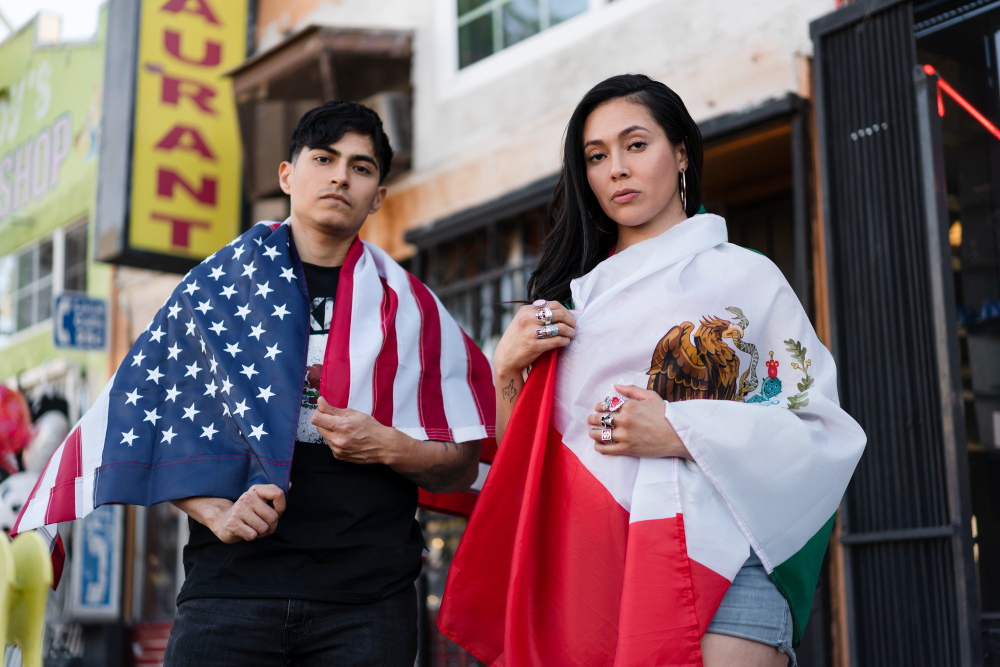
The Latino electorate in the United States has established itself as one of the most decisive demographic and political forces shaping the course of local and federal elections. Historically courted by both Republicans and Democrats, this group possesses an identity-based and socioeconomic complexity that defies simplistic generalizations and one-size-fits-all campaign strategies. As the midterm elections approach, recent opinion polls reveal a significant partisan realignment: while a substantial portion of Latino voters is distancing itself from Donald Trump, the Democratic Party faces complex hurdles in capitalizing on this rejection and transforming this electorate into a solid base of support. An analysis of polling data indicates widespread dissatisfaction with the traditional American two-party system and a desire for effective representation on structural issues, moving away from pure ideological polarization.
The waning support for Donald Trump among Latinos reflects the erosion caused by aggressive rhetoric and an anti-immigration agenda that frequently clashes with the lived realities of these communities. As detailed in a survey published by CBS News, public perception of the former president's aggressive stance on border enforcement and deportations has led to a noticeable distancing, undermining some of the gains the Republican Party had achieved in previous election cycles. However, this disaffection does not automatically translate into enthusiastic support for the Democratic platform. Frustration with the current administration stems from unfulfilled promises and a perception of legislative inertia, leading many Latino voters to adopt a stance of critical neutrality or to identify as independents, refusing to give a blank check to either major party.
This phenomenon takes on specific characteristics in states of crucial geostrategic importance, such as Texas. A detailed study published by the Texas Tribune illustrates that the erosion of Republican support among the local Hispanic population is a statistical reality, driven by a desire for stability and basic social safeguards. However, the same study emphasizes that Democrats are struggling to win over these voters and automatically or consistently capitalize on this dissatisfaction. The Texas Latino voter — often characterized by conservative community values and a focus on entrepreneurship and economic security — displays keen skepticism regarding the effectiveness of policies proposed by the Democratic Party, resulting in a significant bloc of undecided and highly volatile voters who avoid firmly aligning with any traditional party ideology.
Beyond isolated state-level dynamics, a broader macroeconomic and social perspective across the U.S. Southwest highlights the centrality of pragmatic demands over purely partisan rhetoric. A nationwide bipartisan poll conducted and released by the organization UnidosUs clearly shows that the primary concerns of Hispanic voters in key electoral battleground states are intrinsically linked to the cost of living, inflation, job creation, and the quality of public and private healthcare services. According to the aggregated data from this survey, while anti-immigration rhetoric drives this demographic away from Trump’s political camp, Democrats fail to connect with the urgent, everyday material needs of Latino families — preventing widespread or lasting support for their candidacies.
Considering this,
converging data from various polls indicate that the Latino electorate can no
longer be treated as a monolithic or predictable voting bloc by U.S. party
leaders. The visible distancing from Donald Trump — both his persona and his
proposals — creates a historic window of opportunity; however, the Democratic
Party's lack of robust, tangible socioeconomic proposals has kept these voters
in a state of political alienation or pragmatic independence. The future
balance of power within U.S. institutions will depend fundamentally on either
party's ability to translate its platform into concrete solutions regarding the
cost of living and social well-being, transcending purely identity-based
appeals that no longer fully resonate with Hispanic communities.