 U.S. Department of Homeland Security (DHS)
In recent months, the Trump administration has implemented restrictive measures against press freedom domestically. Customs lawsuits and limitations on the presence of media outlets in government spaces and other important locations are among the measures imposed on American and foreign journalists. According to Clayton Weimers, executive director of Reporters Without Borders (RSF), Donald Trump attempts to control political narratives by restricting press access to crucial decision-making spaces, using abstract measures to avoid transparency and accountability, which undermines press freedom.
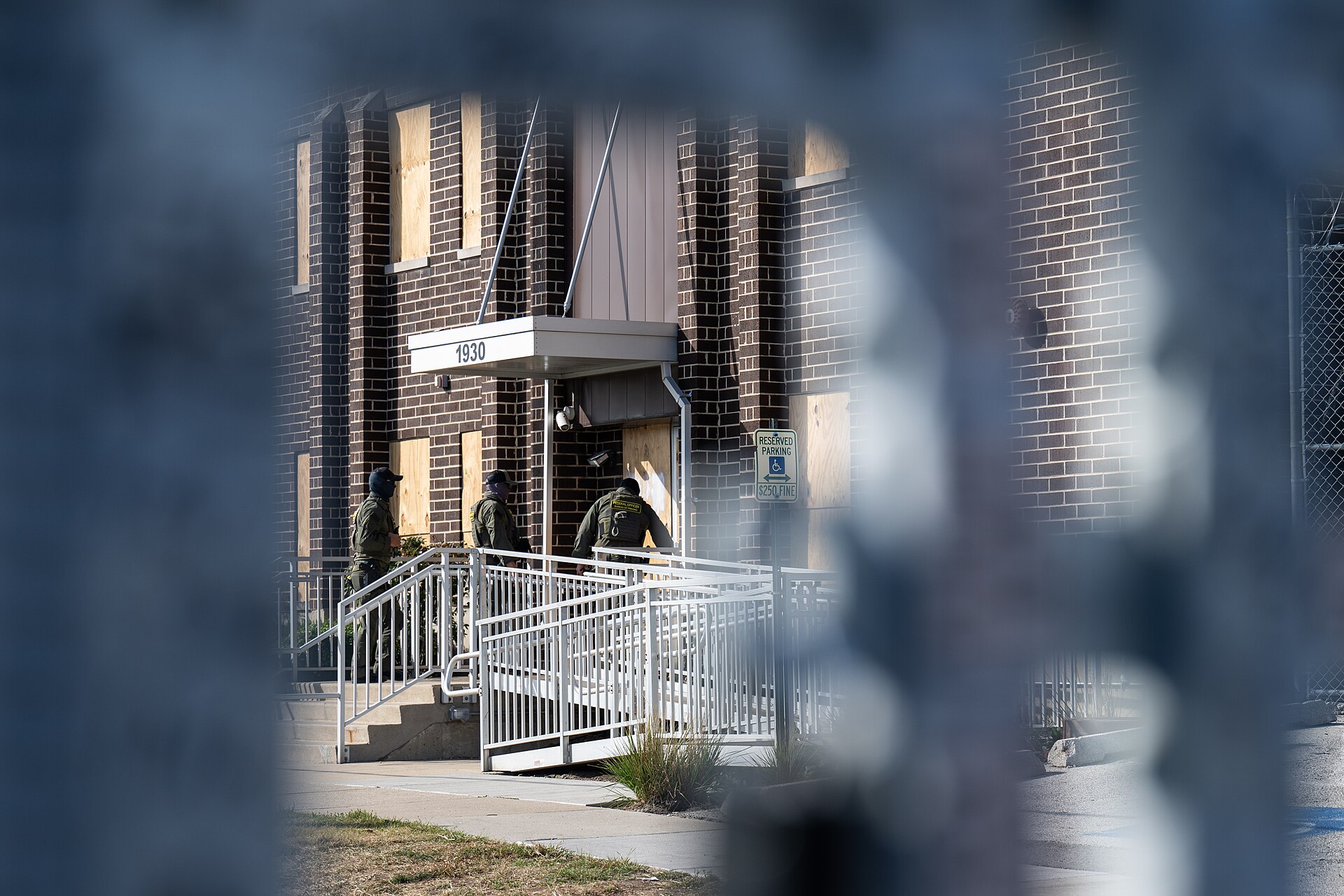
Among the measures applied to individuals, the detention of US citizen journalists and the restriction of entry for foreign journalists into the country stand out. At least two journalists covering immigration-related topics for Spanish-language media outlets were detained and held in custody at U.S. Customs and Border Protection (ICE) facilities. Estefany Rodríguez and Mario Guevara, who, according to authorities, were in the U.S. legally, were deported to their countries of origin, Colombia and El Salvador, respectively.
In June of last year, ICE agents denied entry to Australian writer Alistair Kitchen after border officials searched his phone and questioned him about his stance on the conflict between Israel and armed groups in the Gaza Strip, given that the writer had previously published articles about student protests at universities in his country on the Substack platform.
The student protests, held at the beginning of the Trump administration in 2025, were also the target of judicial measures that restricted the holding of these demonstrations. Executive Order No. 13,899, signed in January of last year, indicated the use of "all available and appropriate legal tools" by the federal government to prosecute, remove, and deport those who, according to the order, were legal immigrant students involved in what Washington called "illegal harassment and antisemitic violence".
In addition to denying entry to foreign journalists in the U.S., the Department of Homeland Security (DHS) has proposed changes to the issuance of future visas for foreign journalists, the "Type 1" visa. This new proposal would allow foreign journalists to enter for up to 240 days, apart from only 90 days for those with Chinese citizenship, reducing the length of stay for correspondents from international news outlets in the U.S.
Among the limitations on the presence of media outlets in government spaces, in October 2025, the Trump Administration announced restrictions on journalists working inside the White House. The new measures prevented journalists from accessing the second-floor offices belonging to the White House Press Office, a place where reporters had previously had relative access to speak with officials inside the White House. Also, in October of last year, two reporters from the Capital News Service (CNS) were forced to leave the Hyattsville (Maryland) Immigration Court until they received permission from the federal government to attend the hearings. Subsequently, federal authorities reversed the decision, claiming that immigration hearings are open to the public and the press.
Last May, Trump proposed that federal employees sign confidentiality agreements aimed at preventing leaks and the sharing of classified information from the White House and other government institutions. This sought to prevent the leakage of documents to the press, which compromises the continuity and, often, the secrecy of the agenda of government institutions such as ICE. According to MC Pinover, a representative of the U.S. Office of Personnel Management (OPM), in an email sent to Reuters, "this action focuses on the concern that the unauthorized publication of sensitive government information is harming the operations of institutions and undermining trust in the federalgovernment".
Given the scenario described, the Trump administration has implemented a set of systematic measures that result in the restriction of press freedom in the United States, operating at both the individual and institutional levels. At the individual level, these control actions manifest themselves severely through customs legal proceedings, detentions and deportations of legally registered journalists, such as the cases of Estefany Rodríguez and Mario Guevara, as well as the interrogation and refusal of entry of foreign writers motivated by their ideological publications, such as Alistair Kitchen. This policy of immigration and ideological control also extends to "Type 1" visas, whose proposed reduction in the length of stay for international correspondents limits foreign journalistic coverage in the country.
In parallel, the government acts to physically and institutionally limit the work of the press on domestic soil. This is evident in restrictions on access to crucial government spaces, such as the offices of the Press Secretary in the White House, and attempts at exclusion in immigration courts, reducing the transit spaces for reporters. Finally, the recent imposition of confidentiality agreements for federal employees, justified by the government as a necessity to protect sensitive operations and prevent the leakage of information from agencies such as ICE, consolidates a siege that makes it difficult for documents to escape to the media.
In short, the government uses legal, administrative, and immigration
tools to empty the spaces for communication professionals to operate, which, as
pointed out by "Reporters Without Borders," mitigates public
transparency and avoids the due accountability of government institutions.